
Knee replacement surgery is an established treatment for patients with advanced knee arthritis and significant joint damage. The procedure is aimed at reducing persistent pain, improving mobility and helping patients return to their routine activities with better knee function.
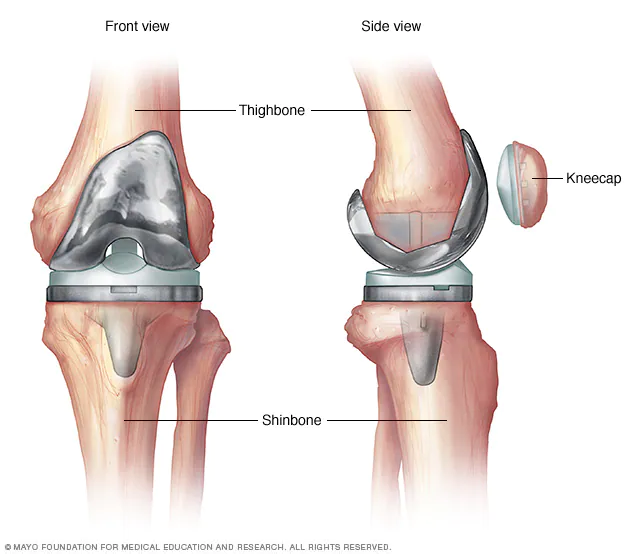
Knee replacement, also known as knee arthroplasty, involves removing damaged portions of the thighbone (femur), shinbone (tibia) and, when required, the underside of the kneecap (patella). These surfaces are replaced with carefully selected artificial components designed to restore the alignment and movement of the knee joint.
Before recommending knee replacement surgery, an orthopedic surgeon evaluates the severity of symptoms, knee alignment, range of motion, stability, muscle strength and the impact of knee problems on daily activities. Clinical examination and imaging studies such as X-rays help determine the extent of joint damage and guide treatment planning.
The choice of implant and surgical technique depends on several factors, including the patient's age, activity level, body structure, bone quality, extent of arthritis, overall health and the condition of the surrounding knee structures. Treatment is planned according to the individual needs of each patient.
Total Knee Replacement is a surgical procedure in which the damaged surfaces of the knee joint are replaced with artificial components. It is commonly performed for advanced arthritis affecting multiple compartments of the knee and causing persistent pain, stiffness and difficulty with walking or other daily activities.
During the procedure, the damaged end of the femur is carefully prepared and fitted with a metal component. The damaged surface of the tibia is similarly prepared and replaced with a component consisting of metal and a durable plastic bearing. Depending on the condition of the patella, its damaged surface may also be replaced with a plastic component.
The design of a total knee replacement may vary according to the condition of the patient's knee and the supporting ligaments. The posterior cruciate ligament (PCL), which contributes to stability and controlled movement of the knee, may be preserved or addressed according to the selected implant design and surgical requirements.
Partial Knee Replacement is a treatment option for selected patients in whom arthritis is limited primarily to one compartment of the knee. Instead of replacing the entire joint, only the damaged compartment is treated while the healthy portions of the knee are preserved.
Depending on the location of arthritis, a partial replacement may involve the medial compartment, lateral compartment or, in selected cases, the patellofemoral compartment. Careful assessment is required to determine whether the remaining cartilage, ligaments and other structures of the knee are suitable for this approach.
Partial knee replacement may involve a smaller surgical exposure compared with total knee replacement and can allow preservation of more of the patient's natural knee structures. However, the suitability of partial replacement depends on the pattern and severity of arthritis and the overall condition of the knee.
Knee replacement is performed under appropriate anaesthesia, which may include regional or general anaesthesia depending on the patient's health, surgical plan and anaesthetist's assessment.
Recovery following knee replacement is a gradual process. Early movement, physiotherapy and appropriate rehabilitation play an important role in restoring knee strength, flexibility and functional mobility. The rehabilitation programme is tailored according to the patient's surgical procedure, physical condition and progress.
Patients are guided regarding exercises, walking progression, wound care and activity modification during recovery. Regular follow-up helps monitor healing, knee function and overall progress after surgery.