
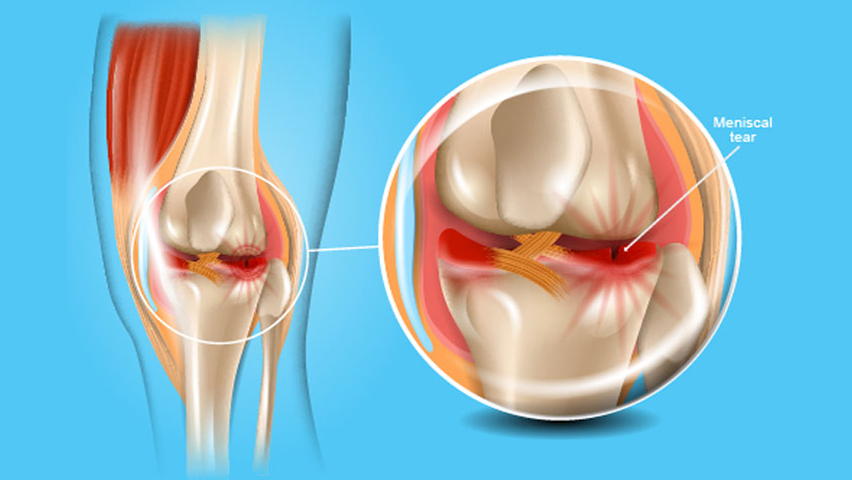
Meniscus injuries are among the common causes of knee pain and dysfunction. They may occur during sports, sudden twisting movements, falls or other injuries. Meniscus tears can also develop gradually as the cartilage becomes weaker with age or degenerative changes in the knee.
The knee contains two menisci, one on the inner side (medial meniscus) and one on the outer side (lateral meniscus). These crescent-shaped structures are located between the thighbone (femur) and shinbone (tibia).
The menisci help distribute load across the knee, absorb shock and contribute to joint stability. They also help protect the articular cartilage during everyday activities such as walking, running and climbing stairs.
A meniscus tear occurs when the cartilage is damaged or split. In younger and physically active individuals, tears are often associated with a sudden twisting or pivoting injury. In older individuals, degenerative changes can make the meniscus more vulnerable to tearing even during relatively minor movements.
Meniscus injuries can result from sports, accidents or degenerative changes within the knee. A tear may occur when the knee rotates while the foot remains firmly planted on the ground.
Symptoms may vary depending on the location and severity of the tear. Some patients experience symptoms immediately after an injury, while others develop discomfort gradually.
Diagnosis begins with a detailed medical history and physical examination. Specific clinical tests may be performed to assess the meniscus and other structures of the knee. X-rays may be used to evaluate the bones and identify associated arthritis, while an MRI scan can provide detailed information about the meniscus, ligaments, cartilage and other soft tissues.
Treatment depends on factors such as the type and location of the tear, the patient's age, activity level, symptoms and the presence of other knee problems. Not every meniscus tear requires surgery.
Depending on the individual case, treatment may include activity modification, medication when appropriate, physiotherapy and a structured rehabilitation programme. Persistent symptoms, mechanical problems or certain types of traumatic tears may require arthroscopic surgery.
Meniscus surgery is commonly performed using knee arthroscopy. Through small incisions, a camera and specialized instruments are introduced into the joint to assess the tear and treat the damaged meniscus.
Whenever appropriate, meniscus repair may be considered to preserve the patient's natural meniscal tissue. If a tear cannot be repaired because of its pattern, location or poor healing potential, selective removal of the damaged portion (partial meniscectomy) may be performed.
Meniscus repair aims to preserve and restore the damaged cartilage rather than removing it. It may be suitable for selected tears with adequate blood supply and favorable characteristics for healing. The decision to repair depends on the patient's age, tear pattern, location, tissue quality and associated injuries.
When a damaged portion of the meniscus cannot be effectively repaired, selective removal of the unstable or torn tissue may be considered. The goal is to address the damaged portion while preserving as much healthy meniscal tissue as possible.
Recovery depends on the type of meniscus treatment performed and whether other knee injuries are present. Rehabilitation may include exercises to restore knee movement, reduce swelling and improve the strength and control of the muscles supporting the joint.
Following meniscus repair, activity and weight-bearing progression may be more gradual to allow the repaired tissue to heal appropriately. The rehabilitation programme is individualized according to the surgical procedure and the patient's recovery.
Persistent knee pain, swelling, locking, restricted movement or a feeling of instability after an injury should be evaluated by an orthopedic specialist. Early assessment can help identify meniscus damage and associated ligament or cartilage injuries and guide appropriate treatment.